
As supply chains become more demanding, warehouses are under increasing pressure to move more goods with fewer resources. Yet many facilities continue to rely on manual truck loading processes that slow operations, increase costs, and create unnecessary safety risks.
Certain operational challenges consistently appear in facilities that are overdue for a change. Here are six signs that your warehouse could benefit from an automated truck loading system.
1. Long truck queues at the loading docks
If trucks regularly spend valuable time waiting to be loaded, your loading process may have become a bottleneck. Queues frustrate drivers, but the bigger problem is the impact they have on operations: disrupted production schedules, higher carrier waiting charges, and fewer trucks handled per day. During peak periods, these delays can ripple through the entire supply chain.
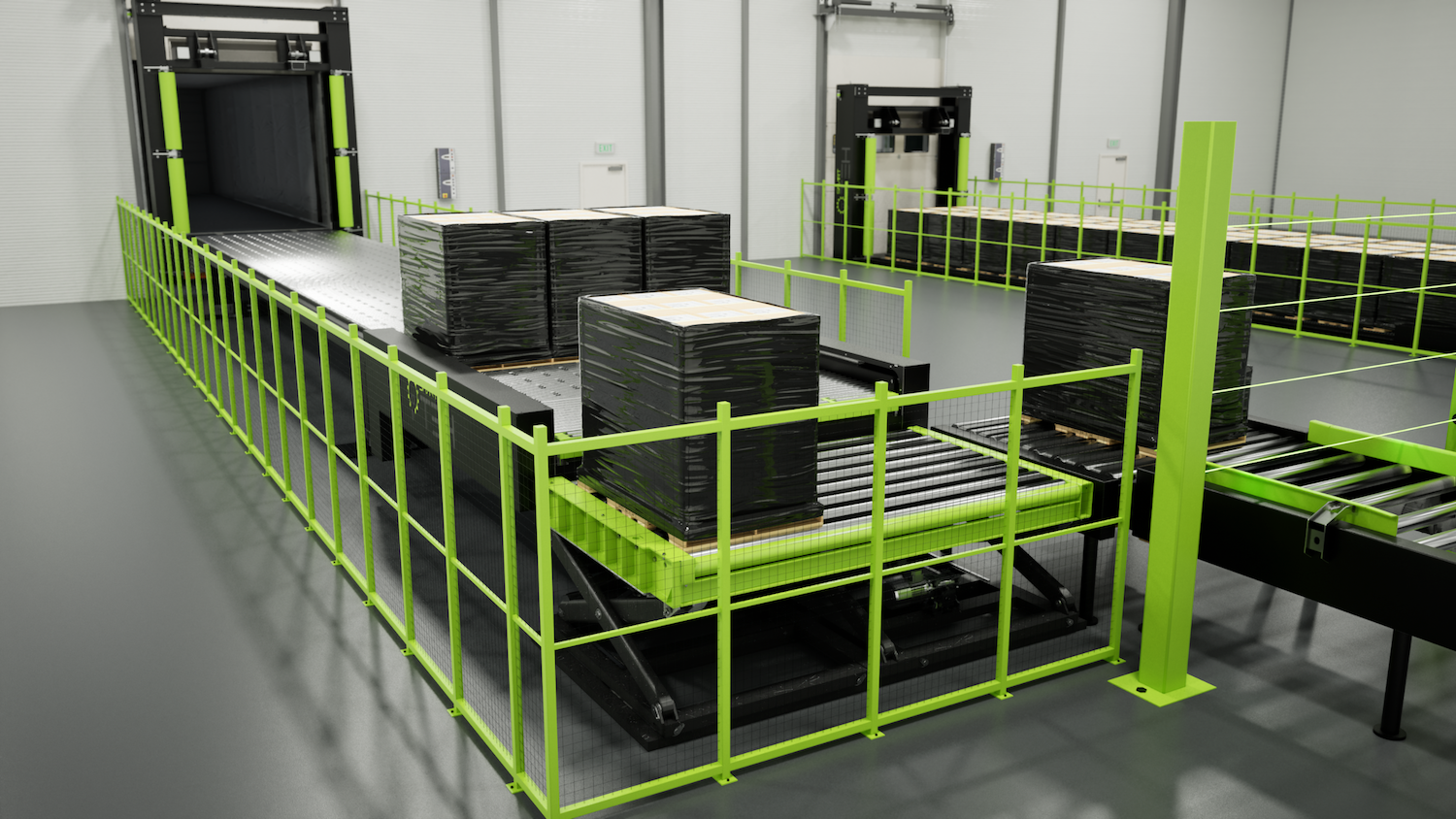
Automated systems transfer pre-staged goods into trailers in one continuous motion, which cuts loading time and keeps docks available for the next shipment.
2. Frequent product damage during loading
Every damaged shipment comes at a cost. Forklift impacts, unstable loads, repeated handling, and improper load positioning can all result in damaged products, customer complaints, and expensive returns. Over time, recurring damage chips away at customer confidence and the company’s reputation.
Automation reduces manual handling, helping products be loaded more consistently and securely.
3. Labor shortages are affecting operations
Finding and retaining qualified warehouse staff has become harder across many industries. When experienced forklift operators aren’t available, loading schedules become harder to maintain, and existing employees end up working overtime – which raises labor costs and adds to fatigue.
An automated system reduces dependence on manual labor, so staff can focus on higher-value work while throughput stays consistent even when staffing levels are tight.
4. Safety incidents are becoming a concern
Loading docks are among the busiest and highest-risk areas in any warehouse. Forklift traffic, pedestrian movement, heavy loads, and confined spaces all increase the risk of accidents, and even a near miss can trigger a costly investigation or disrupt operations.
Automating the loading process reduces forklift traffic inside trailers and limits manual cargo handling – a safer setup for both warehouse staff and truck drivers.
5. Loading costs continue to rise
Labor costs are usually where the conversation starts, but they’re rarely the whole story. Forklift fuel costs, equipment upkeep, product damage, overtime, waiting charges, and operational inefficiencies all add to the real cost of moving a shipment.
Automation requires an upfront investment, but most warehouses recover that cost in two to three years through faster operations, lower labor needs, and fewer loading-related expenses.
6. Loading times vary from truck to truck
If one truck gets loaded in 30 minutes and the next takes an hour, that’s a sign consistency has slipped. Manual loading times depend on operator experience, product type, trailer positioning, and how busy the warehouse is – all of which make planning harder and outbound logistics less predictable.
Automated loading delivers consistent loading times regardless of shift changes or operator experience, making dispatch schedules much easier to plan.
Is it time to rethink your loading process?
These issues rarely show up in isolation. As order volumes grow and expectations rise, manual truck loading tends to become one of the biggest constraints on efficiency.
If several of these signs sound familiar, it’s worth evaluating whether an automated truck loading system fits your operation. Faster loading, reduced product damage, improved safety, lower operating costs, and more consistent performance all contribute to a more resilient and competitive warehouse.
Automation improves more than loading speed. It makes the entire outbound operation more predictable, efficient, and easier to plan.