




In 2012, the EU Commission passed the first version of UN ECE R-141, legislation that makes Tyre Pressure Monitoring Systems (TPMS) mandatory for all M1 category vehicles below 3.5 tonnes.
15th July 2024 · 2 min readBest Bilingual IB School 2026 – Attica
Based in Varkiza, on the Athenian Riviera, DES Interactive European School is a leading bilingual English-Greek educational facility. It works with nursery-age children through to those in secondary education, and has nurtured a genuinely international community spanning almost 30 nationalities.
Posted on 2nd November 2026 · 5 min read
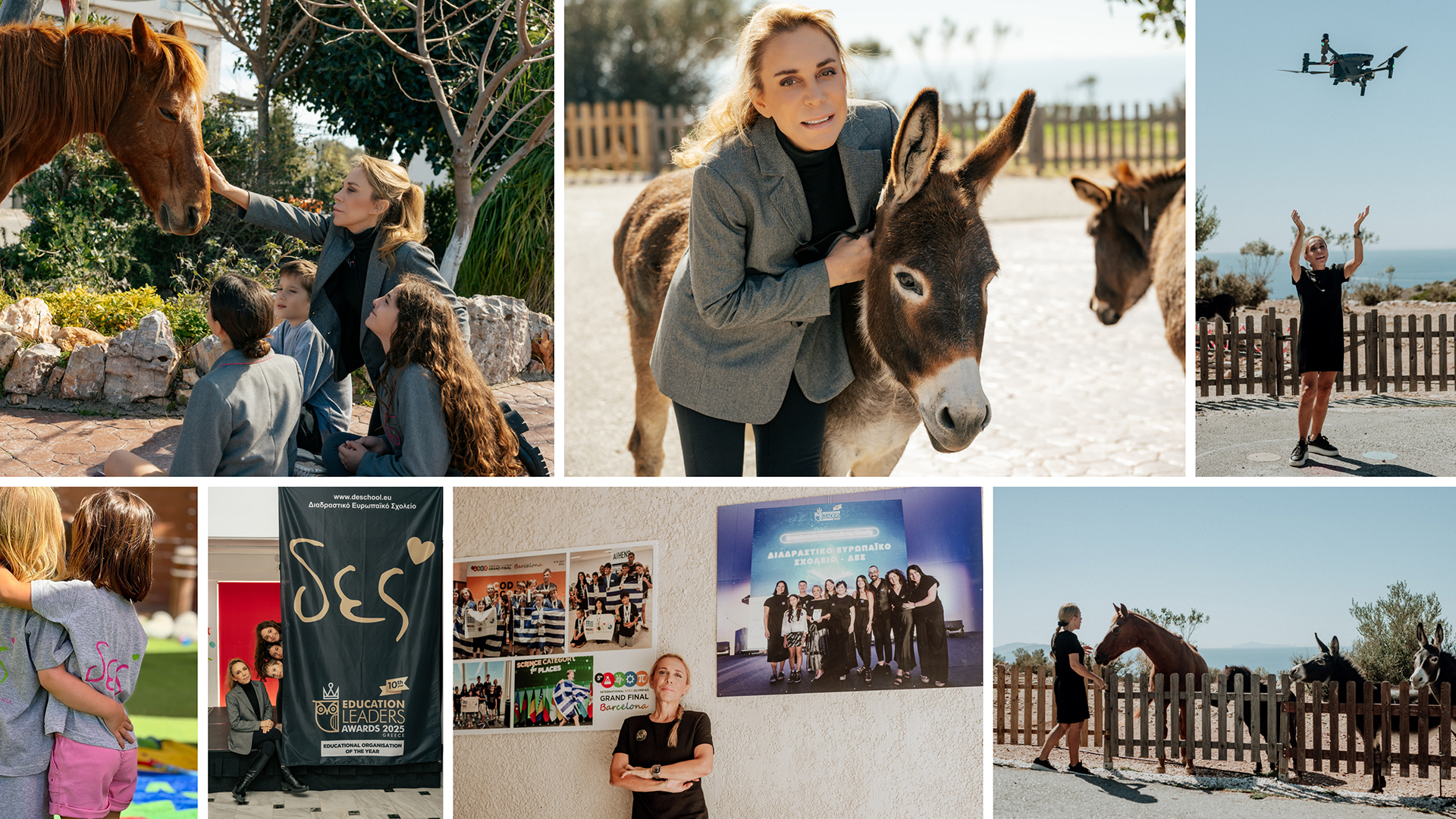
DES: Where Learning is Serious Fun
Based in Varkiza, on the Athenian Riviera, DES Interactive European School is a leading bilingual English-Greek educational facility. It works with nursery-age children through to those in secondary education, and has nurtured a genuinely international community spanning almost 30 nationalities. On the back of its recognition as the Best Bilingual IB School 2026 – Attica in this year’s Hellenic Business Awards, we caught up with Dr Billie Konstantara, its founder and CEO, to find out more.
The first bilingual school in Greece to combine the renowned International Baccalaureate (IB) programmes with Howard Gardner’s Theory of Multiple Intelligences, DES Interactive European School offers rigorous, inquiry-led, student-centred learning grounded in the Greek educational context, international pedagogical practice, and the deeply comprehensive IB framework. At present, DES is authorised to offer the IP Primary Years Programme (PYP) and the Middle Years Programme (MYP), with the Diploma Programme to follow.
In mixing the rigour of the IB programmes with the Theory of Multiple Intelligences model, which challenges the traditional view of general intelligence by arguing that people possess autonomous intelligences that interact and enable them to solve problems, DES creates an environment where every student is distinct and everyone loves to learn. Promoting these characteristics within pupils, who are the future of our society, is just one way Dr Billie Konstantra applies the most innovative models and theories right across the school.
“At DES, innovation begins with a simple question: does this improve the way a child learns, belongs, or understands the world?”
Today, the wider bilingual IB school is made up of four separate complexes in the southern suburbs. Across its nursery, kindergarten, primarily school, and middle school offerings, DES is home to approximately 450 students and 150 staff. Since the first of these locations was opened back in 2004, DES’ mission has always been to inspire young minds through a curriculum built around them and their growth. This is one of the reasons why it views all subjects as primary subjects, be it sport, music, art, literature, languages, or maths.
At the heart of DES’ learning are its campuses, which are so much more than just settings where teaching happens. An invaluable part of the curriculum, each location allows children to learn across classrooms, gardens, and outdoor spaces, with animal interactions and other unique experiences allowing them to connect their knowledge with the natural world. Recognising just how diverse their future learning and careers will be, DES also integrates technology, robotics, creativity, and social responsibility into its learning ecology.
Teaching at DES is done so according to the central values behind the school: intellectual curiosity, inclusion, responsibility, international-mindedness, and genuine care for the individual child. These are indicative of a school that cares about more than just results. Billie explained: “Our goal is not merely to prepare students for examinations. It is to develop knowledgeable, ethical, and emotionally secure young people who can think independently, collaborate across cultures, and contribute meaningfully to society.”
Every member of staff at this IB PYP and MYP school in Greece works towards its mission of ensuring that every child is seen, understood, and challenged appropriately. It does this by setting high (but achievable) expectations, marrying them with close observation, strong relationships, and carefully differentiated teaching. Since DES is also an international microschool on the Athenian Riviera, students benefit from a small learning community, meaning teachers really know their students and can respond quickly to their needs.
Strong connections are also developed across subjects, age groups, and cultures, seen through initiatives like the Bigs and Littles mentorship model, which help translate this philosophy into daily practice by cultivating belonging, empathy, and responsibility across the school. DES also benefits from being a part of institutions much bigger than itself, with its IB authorisations being complemented by its status as a Round Square Global Member school in Greece, as well as its aforementioned membership to the Microschool Network.
These are all impressive achievements, but for Billie, the biggest source of pride comes from building DES as something human. She told us: “We have built a school in which children do not disappear into a system. They are known by name, recognised for their particular strengths, and supported as whole people.” This is something that is ongoing, and consistent results are achieved across year groups thanks to a coherent model, one where elements like a nature-based international education are all seamlessly integrated.
Perhaps the main reason why families choose DES, however, is the sense of trust that the school promotes. By seeing education first and foremost as a relationship between students, educators, and parents, DES is able to make the promise that every child will not follow the same route. Instead, they receive serious attention, appropriate challenge, and the confidence to develop an authentic voice. In a world of AI, this is all increasingly important.
Billie elaborated: “If information can be generated instantly, schools must become even more rigorous about source evaluation, academic integrity, conceptual understanding, and the distinctly human capacities of curiosity, ethical reasoning, and dialogue.” Technology, she believes, should extend thought, not replace it. By doubling down on areas such as bilingual education, continuity across international curricula, smaller learning communities, and student wellbeing, the school remains relevant in today’s ever-changing world.
Despite this, it is important to note that the transformations in education brought about by AI are not all bad. When used responsibly, tools can even help teachers identify patterns and intervene earlier. Still, human relationships remain essential, and professional judgement will always be an essential safeguard in schools. This is why the future of education, if done right, will not be less human. Rather, it will allow institutions to be more even attentive.
As for its own future, the next steps for this Bilingual IB school in Athens involve preparing for the introduction of the IB Diploma Programme next year. This is the third stage following the PYP and MYP areas mentioned above. To suitably house this initiative, DES is also extending its secondary provision by opening a high school. These are exciting times for DES, which seeks growth only if it preserves the coherence and culture of care which define a school where people and their personal journeys come first.
Ultimately, DES Interactive European School has been built on the idea that educational excellence is both measurable and deeply relational. Of course, authorisations, academic outcomes, and awards (like being named Best Bilingual IB School 2026 – Attica in this year’s Hellenic Business Awards) are important, but only when they emerge from a culture that is innately excellent, not one that looks to be recognised.
Summarising the journey of this award-winning bilingual school, Billie shared in closing: “DES is the story of a community seeking to reconcile qualities that are too often presented as opposites: international perspective and local identity, technological fluency and contact with nature, academic ambition and emotional safety, individual attention and social responsibility. Our recognition as Best Bilingual IB School 2026 – Attica honours that philosophy, and the educators, students, and families who bring it to life each day.”
Contact Details
Contact: Dr Billie Konstantara
Company: DES Interactive European School
Web Address: https://www.deschool.eu/
Popular Articles


Best Bilingual IB School 2026 – Attica
5 min read
Japan or the Republic of Korea? 7 Things European SMEs Should Know Before Expanding into Asia
4 min read
Best AI Contract Review Software in 2026: Three Tools and Who Each One Suits
4 min read
AI UGC Ads: Where Synthetic Creator Videos Help and Where They Backfire
4 min read
You Might Also Like
New Tech Can Help With Mandatory Tyre Pressure Monitoring Systems (TPMS) Compliance

Best Dropshipping Platforms in 2026: The Enterprise Retailer’s Shortlist
A merchandising director at a regional department store once told me she searched "best dropshipping platforms" and spent twenty minutes reading about product research tools and trending phone cases. Her actual question was harder. How ...
25th September 2026 · 4 min read
AI in Education: Preparing Europe’s Workforce for the Future
Education in Europe is changing quickly. Schools, universities, and corporate training programs are using artificial intelligence to make learning more effective, personalized, and aligned with workplace needs.Notably, can be applied in classrooms...
22nd September 2025 · 2 min read