




The UK telecoms industry has seen earnings on its investments in the EU grow 40% since the referendum despite the Brexit debacle, analysis of the latest ONS data has revealed.
17th February 2020 · 2 min readCustom Paper Bags: How EU Retailers Meet the New Rules for 2027
Posted on 19th November 2026 · 6 min read
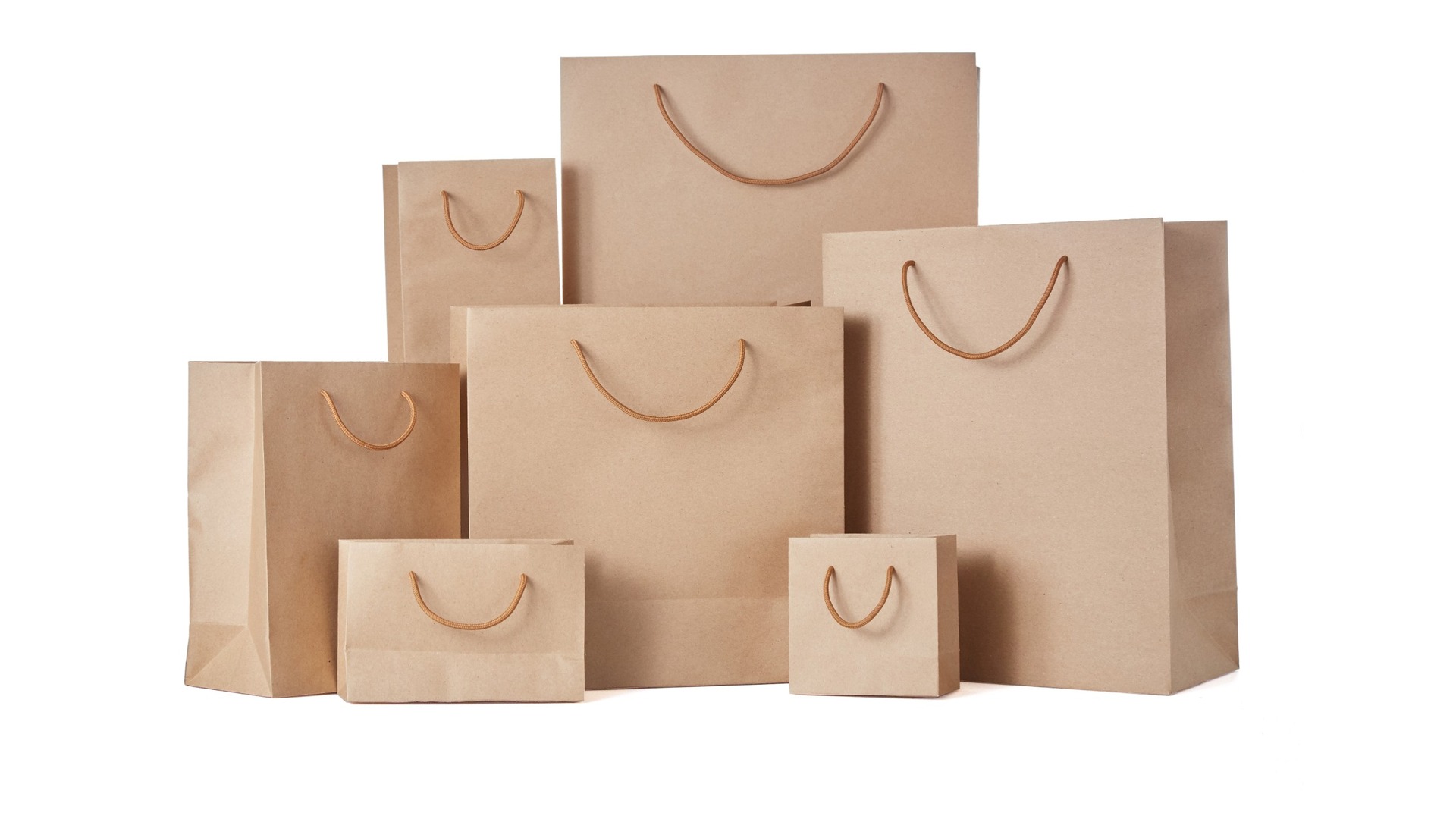
Small companies have until 30 June 2027 to comply with the EU Deforestation Regulation for most products. Paper is not one of them. From 30 December 2026 the regulation applies to paper carrier bags for importers of every size, because paper came under the earlier EU Timber Regulation and the extra six months were not given to anything on that list.
It is the third EU rulebook to reach the paper bag in five months. The Packaging and Packaging Waste Regulation (PPWR) has applied since 12 August 2026, and Directive (EU) 2024/825 on environmental claims since 27 September 2026. For a retailer ordering custom paper bags for 2027, each one asks for a different document, and not all of them come from the supplier.
1. The forest: a due diligence statement
Paper carrier bags fall under heading 4819 in Chapter 48, which is listed in Annex I of the Deforestation Regulation. Bags that arrive wrapped around goods are left out as packing material. Bags imported empty, by the carton, are the product itself and are in scope.
The duty sits with the first company established in the EU that places the bags on the market. A retailer that imports direct is that company. Where an EU wholesaler brought the bags in, the wholesaler is.
Before the bags go on the market, the importer files a due diligence statement in the EU information system. Article 9 lists what it rests on:
- the tree species and the quantity in kilograms
- the country of harvest
- coordinates for each plot, and when it was cut (a date or a range)
- evidence that the wood was harvested legally and is deforestation-free
The importer holds those records for five years. Member states set their own fines, and the regulation requires the maximum to be at least 4% of the company’s annual turnover in the EU.
“The supplier files nothing, but the importer cannot file without what the paper mill knows,” says Simmy Lin, General Manager of Bk-bags, a Ho Chi Minh City based supplier of custom printed paper bags and reusable shopping bags. “So the question about where the trees grew has to be asked at quotation. You cannot add origin data to paper that has already been bought without it.”
Production of printed paper bags takes 45 to 60 days after artwork approval, according to Lin, with sea freight on top. Artwork approved in late November means bags that land in the EU in January, when the statement is already required.
The risk rating belongs to the forest. Vietnam and China both sit on the Commission’s low-risk list, but the list grades the country where the trees grew, not the country where the bag was made. A bag produced in Vietnam from pulp harvested elsewhere takes that other country’s rating. A low-risk origin removes two steps, risk assessment and mitigation. It removes nothing from the Article 9 list, and the plot coordinates are still owed.
Recycled paper bags are outside the regulation only at 100%. It does not apply to goods “produced entirely from material that has completed its lifecycle”. Mix in any virgin fibre and that portion of the kraft paper has to be traced.
2. The label: what an FSC claim settles
The FSC logo does not answer the forest question. Certification “could be used in the risk assessment procedure”, the regulation states, but should not “substitute the operator’s responsibility as regards due diligence”.
The FSC claim does a different job: it is what allows an environmental label to stay on the bag. Since 27 September 2026, Directive (EU) 2024/825 has banned generic environmental claims to consumers, such as “eco-friendly” or “green”, unless the trader can show recognised excellent environmental performance, for example the EU Ecolabel. A sustainability logo is allowed only if a third-party certification scheme or a public authority stands behind it.
According to the Commission’s questions and answers, packaging falls under the ban, and so does stock printed before it. The document does not name carrier bags. Lin’s reading is that a printed bag in a shopper’s hand is the retailer’s message to that shopper, and should be treated as covered.
On that reading “sustainable paper” comes off the artwork. An FSC label with its licence code can stay, provided the FSC claim is on the supplier’s invoice for that shipment.
“From the FSC system a buyer gets one official document from us: the FSC claim and our certificate code on the invoice,” Lin says of the company’s FSC® chain of custody certificate (FSC® C232146). “Fibre origin details come as our own written declaration. That is not a third-party certificate, and we will not call it one.”
The claim has three forms: FSC 100%, FSC Mix and FSC Recycled. The page for FSC paper carrier bags from Bk-bags lists the three and states the licence code, which, like any FSC code, can be checked on FSC’s public certificate search.
FSC’s trademark standard also changed on 1 July 2026. A label file saved before that date should be replaced with one from the FSC trademark portal.
3. The name on the bag: the packaging regulation
A bag made to be filled at the till is packaging: “paper or plastic carrier bags” appear by name in Annex I of the PPWR. Article 21 gives the title of manufacturer to whoever places packaging on the market under its own name or trademark. On a custom printed paper bag, that means the retailer whose logo it carries.
Three jobs come with the title: the conformity assessment, the technical file and the signature on the EU declaration of conformity. The file is built from the supplier’s data on paper composition, weights and inks, plus the test reports.
Three requirements already apply:
- Heavy metals. Lead, cadmium, mercury and hexavalent chromium together must not exceed 100 mg/kg. The limit covers the packaging and its components, so inks and coatings count.
- PFAS in food-contact bags. Since 12 August 2026: 25 parts per billion for any single PFAS, 250 for the sum, and 50 parts per million in total, with no sell-through period for old stock. This matters for grease-resistant takeaway bags.
- Name and address. The manufacturer’s name and postal address go on the bag, or behind a QR code. The importer’s details are required as well, so a retailer that imports direct appears in both roles and the artwork has to leave room for it.
Two things the regulation does not ask of paper. There is no minimum recycled content, and there is no reuse quota for carrier bags. Member states must have penalties in place by 12 February 2027. The EU harmonised material label follows on 12 August 2028 at the earliest.
The checklist
| Document | Where it comes from | When to settle it |
| Due diligence statement | The EU importer files it | Before the bags go on the market, from 30 December 2026 |
| Country of harvest, species and plot coordinates | The paper mill. The importer asks for it through the supplier | Requested at quotation, needed before the statement is filed |
| FSC claim and certificate code on the invoice | The FSC certified supplier | With each shipment, if an FSC label is printed |
| Evidence for every environmental word and logo | The brand | Before artwork approval |
| Technical file and EU declaration of conformity | The company named on the bag | Opened at quotation, signed by that company |
| Heavy metals test report, and PFAS for food contact | A test laboratory | Agreed in the purchase order |
| Name and postal address in the artwork | The company named on the bag, and the importer | At artwork stage |
“Ask for all seven while the price is still being quoted,” Lin says. “After the printing plates exist, a changed claim means paying for a second set.”
FAQ
Does the EU Deforestation Regulation apply to paper carrier bags? Yes. Empty bags imported as goods are covered from 30 December 2026, and company size makes no difference. The statement is filed by the EU company that first places them on the market.
Does an FSC certificate replace the due diligence statement? No. A certificate can support the importer’s risk assessment. The due diligence itself stays with the importer.
Do paper bags need recycled content in the EU? No. The PPWR sets no minimum recycled content for paper packaging. Recycled paper bags fall outside the Deforestation Regulation only when they are produced entirely from material that has completed its lifecycle.
Who signs the EU declaration of conformity for a printed paper bag? The retailer or brand printed on it. The specifications and test reports come from the supplier, and the signature does not.
Sources: Regulation (EU) 2023/1115, consolidated version of 18 September 2026; Commission Delegated Regulation (EU) 2026/2102; Commission Implementing Regulation (EU) 2025/1093; Directive (EU) 2024/825 and the Commission’s questions and answers of September 2026; Regulation (EU) 2025/40 and Commission Notice C/2026/3084, all checked on 17 November 2026; FSC news pages. Production figures from the supplier quoted. General information, not legal advice.
Popular Articles




Best Bilingual IB School 2026 – Attica
5 min read
Best AI Penetration Testing Tools for Enterprises
4 min read
Best AI Contract Review Software in 2026: Three Tools and Who Each One Suits
4 min read
Japan or the Republic of Korea? 7 Things European SMEs Should Know Before Expanding into Asia
4 min read
You Might Also Like
UK Telecoms Industry Earnings On EU Investments Up 40% Since Referendum
5 Key European Policy Trends That Will Shape Sustainable Mobility in the Coming Years
The construction, transportation and retail industries have one thing in common with many other sectors of the economy: they are directly affected by the change in mobility policies. Numerous laws, directives, subsidies and restrictions flank the ...
20th August 2024 · 4 min read
IT Designed to Suit Garment Manufacturing Supply Chains
Significant changes are under way in the garment and apparel manufacturing industry. In many cases they are both driving and being driven by digitalisation in the sector. If the UK’s many smaller garment manufacturers are to treat these changes as...
24th May 2021 · 5 min read