








According to data from MCS (Microgeneration Certification Scheme), the UK’s quality mark for small-scale renewable energy, South Cambridgeshire has become the second local authority in England to have over 1 in 5 households with a certified renewa...
3rd September 2024 · 2 min readInternational Employers Urged to Act to Ensure Employees are Fully Covered for Healthcare Post-Brexit
Towergate Health & Protection is urging employers to act now to ensure employees are fully covered for healthcare now Britain has left the EU. Sarah Dennis, Head of International at Towergate Health & Protection, explains: “In-country expertise is now essential for any international employer with staff in Europe. If employers do not have this capability within their company, then it is vital to gain access to specialist advice and information, particularly regarding something as important as health and wellbeing.”
Posted on 9th February 2021 · 3 min read

Towergate Health & Protection is urging employers to act now to ensure employees are fully covered for healthcare now Britain has left the EU.
Sarah Dennis, Head of International at Towergate Health & Protection, explains: “In-country expertise is now essential for any international employer with staff in Europe. If employers do not have this capability within their company, then it is vital to gain access to specialist advice and information, particularly regarding something as important as health and wellbeing.”
Brexit challenges
Among the challenges of Brexit is the importance of international employers complying with the differing mandatory requirements for benefits and healthcare across up to 30 different countries.
While Britain was part of the EU, certain globally mobile employees were covered under local policies but, since Brexit, employers now need to look at each country individually to understand their specific requirements.
For example, in Germany critical illness cover, income protection, and life assurance are all covered within private medical insurance (PMI). But for employees in other countries, employers would have to purchase these elements of cover separately, to ensure employees are fully protected.
Passports between the EU and the UK have now ended, as has the transition period. This means that for those based outside of the EU, which now includes those in the UK, the European Economic Area (EEA) countries must now each be treated as individual countries. To make matters more challenging, there are 30 different countries in the EEA, and 27 in the European Union (EU).
Expert requirements
Employers of international staff cannot be experts in the benefits and healthcare policies available in every single country, but some of the requirements are mandatory and companies must comply. It is also important for companies to be able to benchmark, not only against other companies, but against other countries now too, and expert assistance is often required.
In-country expertise and local knowledge of each different country can be a great support for companies with employees throughout Europe. Not every employer will have an expert on-the-ground in every country of the EU, and beyond, so it’s important they work with specialist advisers who can provide this access.
Access to local insurers, independent advisers and specialists in specific areas of health and wellbeing can help ensure employers comply with local stipulations, and that employees have the support they need. It also means that health and wellbeing programmes can be fully customised, not only by company and employee, but also by the country or countries in which they may be working.
Being able to access local healthcare for globally mobilised employees means that everyone can be fully covered to meet the exact requirements of the host nation.
Sarah Dennis concludes: “Even the ability to provide local healthcare cover using the native language is a huge advantage to employers. If a member of staff becomes ill while working abroad, as an employer, you want to know that they will be fully covered and will get all the assistance and care that they need. Sadly, people all too often do not consider the full repercussions until they are in the situation of needing support for their health and wellbeing such as medical assistance. Therefore, we are urging employers to act now to ensure all international employees are fully covered.”
Popular Articles
You Might Also Like
One in Five South Cambridgeshire Households have a Renewable Energy installation
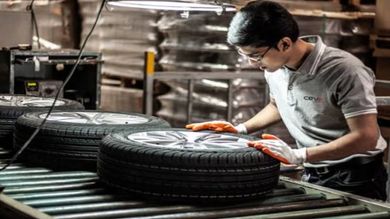
Inbound vs. Outbound Automotive Logistics: Building a Seamless Supply Chain
The automotive industry relies on an organised supply chain to move materials to factories and deliver finished vehicles to their destinations. From the arrival of individual components to the transportation of completed cars, each stage requires ...
19th October 2026 · 5 min read
Business Process Automation Software in 2026: 3 Tools Compared
Picture a finance shared-services team that automated invoice intake two years ago. Standard invoices are captured, matched to purchase orders and posted without anyone touching them. The cost barely moved, because it never sat in the standard in...
1st October 2026 · 4 min read