








In a recent Furniture Choice survey of adults in Great Britain[1], minimalism emerged as this summer’s favourite interior trend, beating out other decorating styles like maximalism, jungle and tropical.
11th June 2019 · 3 min readInvesting Beyond Traditional Assets: The Financial Case for Tiny House Rentals in Europe
Posted on 15th July 2026 · 4 min read
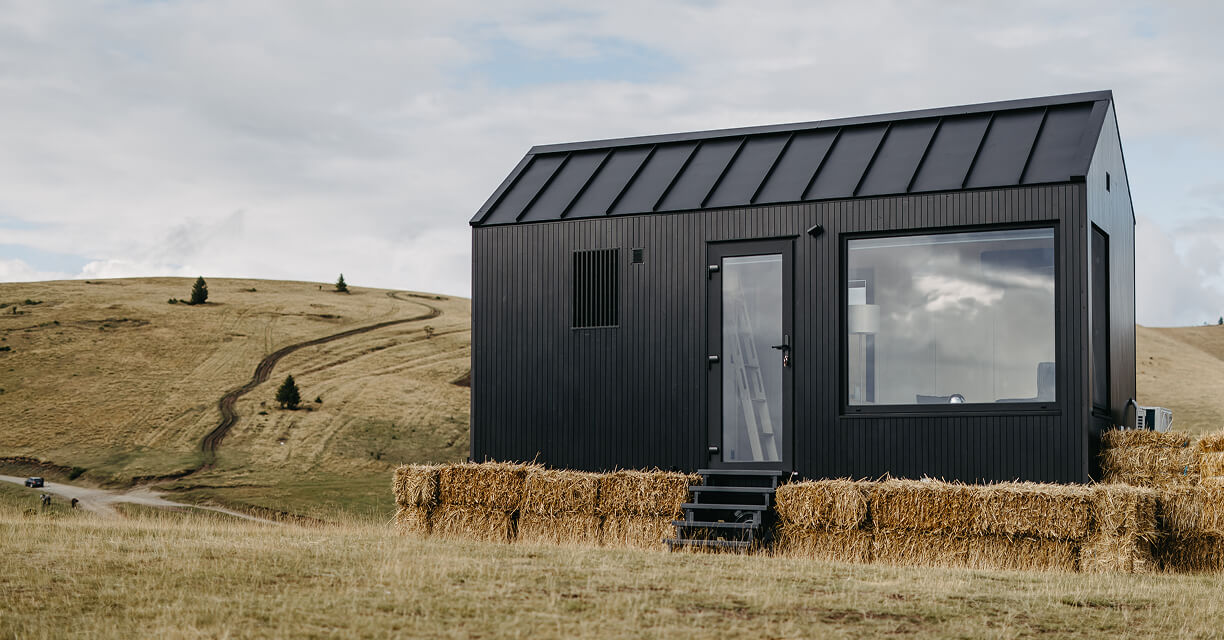
When people think about investing, they usually picture the stock market, bonds, commercial property or buy-to-let apartments. Yet these are far from the only ways to put capital to work. Across Europe, a growing number of investors are looking at more specialised opportunities that combine relatively modest entry costs with attractive income potential.
This article focuses on the numbers behind an investment in rental tiny houses: acquisition costs, potential turnover in different European settings, operating expenses, profit and the resulting return compared with a holiday apartment in Spain or Italy.
The calculations below are based on a set of simplified assumptions that may be achievable in some European locations but not in others. Actual results will depend heavily on the site, local demand, pricing and operating model, so investors should carry out a location-specific feasibility study before committing capital. The purpose of the calculations below is to illustrate the approximate financial shape of the investment and the variables that matter most.
How much capital does a rental-ready tiny house require?
A house intended for intensive guest use needs all-season insulation, reliable heating and ventilation, durable finishes, a fully equipped kitchen and bathroom, safety systems and an interior suited to frequent changeovers.
For illustration, assume:
- Rental-grade tiny house: €75,000
- Transport: €2,000
- Off-grid systems: €7,000
- Minor equipment and launch photography: €2,000
This produces an indicative initial investment of €86,000 before buying or leasing land. The final figure will vary with the specification, transport distance and off-grid equipment.
Land should be treated separately. An investor who owns a suitable plot faces a different case from someone buying land in a tourist area. Leasing space within a campsite, vineyard, farm or hospitality site can reduce the initial commitment but adds a recurring cost.
What turnover could one unit generate?
The calculation is straightforward: the average nightly rate multiplied by occupied nights.
Consider three broad scenarios. A countryside location in Poland or another lower-cost Central European market might average €105 per night at 55% occupancy, producing about €21,100 annually.
A well-positioned unit in Portugal, northern Spain or a popular lake district might average €140 at 65% occupancy, generating around €33,200.
A distinctive cabin in an Alpine, Nordic or other premium nature destination might average €185 at 70% occupancy, producing approximately €47,300.
These assumptions show how sensitive returns are to price and occupancy. At 65% occupancy, increasing the nightly rate by €20 adds roughly €4,700 in annual revenue. Reducing occupancy from 65% to 50% removes more than €7,500 from the €140-per-night scenario.
Operating costs and expected return
Turnover is not profit. Booking commissions and payment fees may absorb 12–18% of revenue; cleaning and laundry 10–15%; utilities 5–8%; and maintenance reserves 5–8%. Insurance, administration and outsourced guest management add further costs. Ground rent, local taxes and financing are additional.
For a mid-case estimate, assume operating costs equal 45% of revenue before land rent, tax and debt service.
Under the €33,200 revenue scenario, operating costs would be approximately €14,900, leaving €18,300 in annual operating profit. Against an €86,000 initial investment, this represents an unleveraged operating return of approximately 21% and a simple payback period of around 4.7 years.
The conservative scenario would leave approximately €11,600 after operating costs, equivalent to a return of around 13.5% and a payback period of about 7.4 years.
The premium scenario could leave roughly €26,000, implying a return of around 30% and a payback period close to 3.3 years. However, premium rates may require a particularly attractive site, stronger marketing, higher service standards and more expensive land.
How does this compare with a holiday apartment in Spain or Italy?
Assume an investor purchases a holiday apartment for €240,000. Adding 10% for taxes, legal fees, furnishing and transaction costs brings the total capital requirement to approximately €264,000.
If the apartment generates €30,000 in annual rental revenue and operating costs absorb 40%, the remaining €18,000 represents a return of about 6.8% before income tax and financing. The simple payback period is nearly 15 years.
The comparison is not like-for-like. An apartment may appreciate, can be easier to finance and belongs to a more established resale market. A mobile tiny house is a depreciating asset whose value depends on its condition, design and access to a suitable site.
However, the capital difference is substantial. The €264,000 needed for the illustrative apartment could theoretically finance three tiny houses at €86,000 each, although this would leave only a small reserve.
If all three achieved the mid-case operating profit of €18,300, their combined annual operating profit would approach €54,900. Multiple units may also spread demand and operational risk, although managing three properties requires more work than one apartment.
The financial case depends on the right house
The calculations only remain attractive if the house supports the assumed rates and occupancy. It must be distinctive, comfortable year-round, durable under intensive rental and located somewhere guests want to visit.
Mobility and off-grid capability can widen the choice of sites, while poor build quality can turn projected returns into repair costs and unavailable booking dates.
Looking beyond traditional property investment
Tiny house rentals are not guaranteed high-yield investments. Performance remains sensitive to planning rules, land costs, seasonality, pricing and management.
Nevertheless, the model illustrates why the sector attracts investor attention. In this example, an initial investment of approximately €86,000 could generate annual revenue of around €21,000–€47,000 and an operating return of approximately 13.5–30%, depending on the location, rate and occupancy achieved.
Compared with purchasing a holiday apartment in Spain or Italy, the entry cost can be considerably lower and the payback period shorter. The trade-off is greater dependence on the quality of the site, the rental concept and day-to-day operation.
If you’d like to explore the investment calculations, desirable rental features and practical considerations in greater detail, visit the website of Polish tiny house manufacturer REDUKT and download their investor’s guide, which examines these topics using real-world examples and market data.
Popular Articles
You Might Also Like
46% of People Choose Minimalism as the Top Trend for Summer 2019

Brexit Revisited: The Outlook for Financial Services Four Years Level
On 31 January 2020, the UK officially left the European Union. After years of deliberation following the 2016 Referendum, the country officially left the EU at 23:00 GMT.
29th January 2024 · 7 min read
Lithuanians Pave Way for EU’s Legal Migration Initiatives with Sub-Saharan Africa
The European Union is facing a shortage of specialists. The reality of demographic characteristics and the labour market dictate that legal migration of talents to the EU is an inevitable need.
19th January 2022 · 5 min read