








The Benelux Enterprise Awards 2019 Press Release
19th July 2019 · 2 min readBest Ways to Get an Italian Residence Permit in 2026: Requirements, Costs, and Timelines
Posted on 2nd September 2026 · 6 min read

Italy issues residence permits to non-EU nationals through four main civilian routes in 2026: the Investor Visa, the Elective Residence Visa, the self-employment and startup visas under the annual Decreto Flussi, and family reunification. For investors, the Investor Visa is the only one with a fixed, predictable price and no income test.
Its lowest tier sits at 250,000 euros into an Italian innovative startup, which remains the cheapest entry point into any major EU residency-by-investment program. Italy also runs the process in an unusual order. Approval comes first, capital moves second, so no money leaves your account until the state has already cleared you.
That sequencing is the reason Italy has quietly become the default alternative for crypto-wealthy applicants while Portugal’s Golden Visa queue stretches past a year.
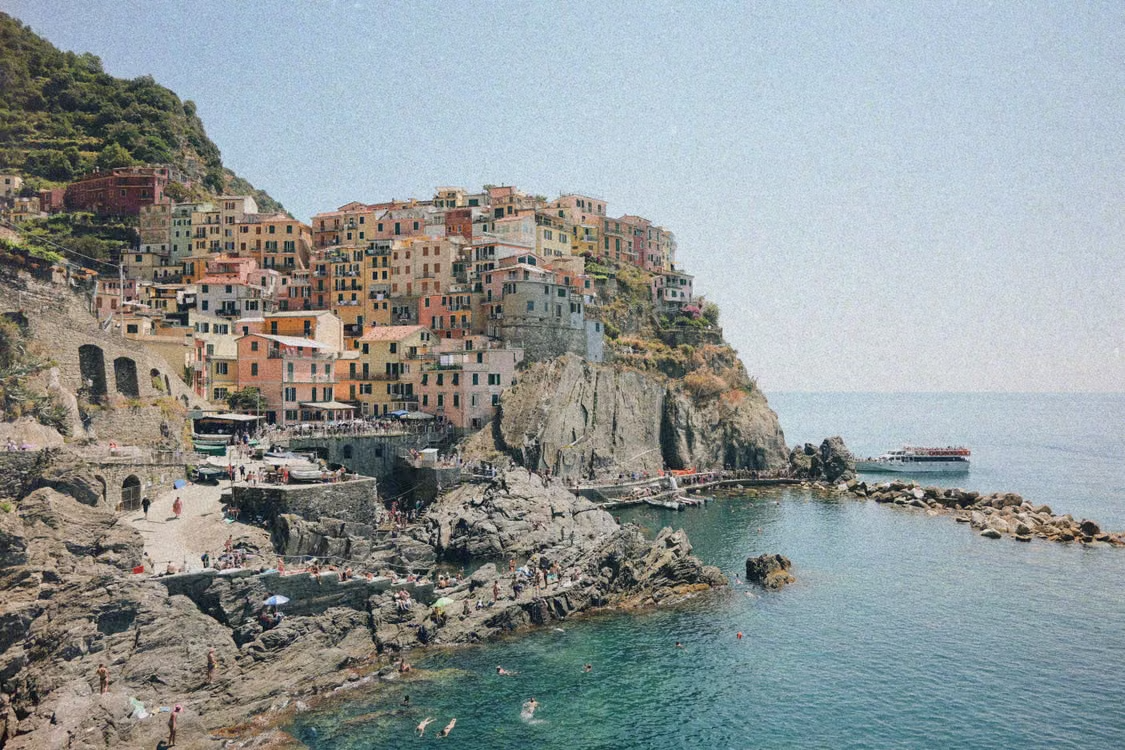
Photo by William Posser on Pexels
Italian Residence Permits in 2026: Key Numbers
- €250,000 minimum for the innovative startup route, the lowest in the EU
- €500,000 for an established Italian company, €1M philanthropic, €2M government bonds
- 30 working days is the policy window for a Nulla Osta decision
- 3 to 6 months from application to residence permit in hand
- 0 days minimum stay to maintain the Investor Visa
- 2 years initial permit validity, renewable in 3-year blocks
- 90 days after arrival to complete the investment
- €300,000 per year for the non-dom flat tax as of January 1, 2026
How the Investor Visa Actually Works
The program runs under Article 26-bis of Legislative Decree 286/1998, introduced in 2017 and largely unchanged since. Four qualifying options exist, and only one is priced within reach of most individual investors.
The 250,000 euro innovative startup route requires an equity investment in a company registered in Italy’s innovative startup register. The company must be under five years old, operate in a qualifying sector, and meet the statutory innovation criteria. You receive full shareholder rights. There is no job creation mandate and no minimum holding period beyond the two years your permit runs.
The other three tiers are 500,000 euros into an established Italian limited company, one million into a philanthropic initiative, and two million into Italian government bonds. Each grants identical residency rights. The startup tier is simply the one most people use.
There is no real estate route, and Italy has given no signal it plans to add one. As of late 2025 there were also no eligible investment fund structures, which distinguishes Italy from Portugal in a way that matters for how Bitcoin exposure gets built into the deal.
The Sequence: Nulla Osta First, Money Second
Most residency programs take your capital before they take your file seriously. Italy inverts that.
You submit an online application to the Investor Visa Committee at the Ministry of Enterprises and Made in Italy, including passport, criminal record certificates, evidence of funds and their lawful origin, and a description of the intended investment. The Committee has thirty working days to respond. Clean files with complete documentation often clear faster.
Once the Nulla Osta issues, it stays valid for six months. You take it to an Italian consulate for the visa, which typically runs another thirty to ninety days and now requires in-person biometric capture. After entering Italy you have eight days to apply for the residence permit and ninety days to complete the investment.
Applications for the Investor Visa reached approximately 209 approved Nulla Osta certificates in 2025, a 63.3 percent increase in a single year, according to IMI Daily. Growth at that rate with no corresponding backlog is the program’s main structural advantage over its neighbors.
Where Bitcoin Fits
No Italian residency route accepts cryptocurrency as a qualifying investment. Bitcoin can fund the investment after conversion, or the target company itself can be a Bitcoin-ecosystem business, which keeps the investor’s capital aligned with the asset class even though the qualifying instrument is equity rather than coin.
The second structure is the more interesting one. Applicants looking to get an Italian residence permit with Bitcoin typically arrive at the startup tier for this reason, since a Bitcoin-focused innovative startup satisfies the statutory test while keeping the thesis intact.
Bitizenship built its Italian product, the Bitcoin Dolce Visa, around exactly that structure: a 250,000 euro equity stake in a Milan-based Bitcoin-focused innovative startup registered under the Italian innovation regime. Alessandro Palombo founded the firm and it has executed more than a hundred Golden Visa applications across its two markets.
Source of Funds Is the Real Test
The Committee’s review is documentary, and crypto files fail there more often than anywhere else. Expect to produce exchange records showing original fiat purchases, wallet histories linking those acquisitions to the coin being liquidated, tax filings from your home jurisdiction reflecting the holdings, and a clean trail from exchange to a regulated bank account.
Italian consulates and the Committee are not hostile to crypto wealth. They are unfamiliar with it, which produces the same outcome if the file is not built for them. Bitizenship’s practice centers on this preparation work, which is why Bitcoin-heavy applicants generally engage a specialist rather than a general immigration firm for the Italian route.
The Tax Question Nobody Should Skip
Italy’s non-dom regime under Article 24-bis TUIR lets new tax residents pay a flat substitute tax on all foreign-source income instead of ordinary rates. The figure rose to 300,000 euros per year on January 1, 2026, up from 200,000, with family members at 50,000 each.
That is a significant increase and it changes the math. The regime still works well for investors with very large foreign income, and poorly for everyone else. Note also that the Investor Visa itself carries no minimum stay, so obtaining the permit does not make you an Italian tax resident. Tax residency follows from spending more than 183 days per year in Italy or registering your habitual residence there. Many Investor Visa holders never trigger it.
Comparison: Italian Residence Permit Routes in 2026
| Route | Financial Requirement | Time to Permit | Minimum Stay | Bitcoin-Compatible |
| Investor Visa (startup) | €250,000 | 3 to 6 months | None | Yes, via BTC-ecosystem equity |
| Investor Visa (company) | €500,000 | 3 to 6 months | None | Liquidation required |
| Investor Visa (bonds) | €2,000,000 | 3 to 6 months | None | Liquidation required |
| Elective Residence | Passive income, no work | 4 to 8 months | Substantial | Difficult |
| Self-employment (Flussi) | Quota-dependent | Quota-dependent | Substantial | Partial |
| Family reunification | Sponsor income test | 3 to 9 months | Substantial | Not applicable |
One eligibility note: the Investor Visa has been suspended for Russian and Belarusian nationals, including dual nationals holding either passport, since July 2023 under EU Recommendation C(2022)554.
From Permit to Passport
Italy is residency by investment, not citizenship by investment, and the distinction is not cosmetic. The permit grants residence, work authorization, healthcare access, and Schengen mobility. It does not grant a timeline to a passport on its own.
Permanent residency becomes available after five years of legal residence. Naturalization requires ten years of continuous residence, and unlike Portugal’s Golden Visa, Italy’s naturalization clock expects genuine presence. Investors who never relocate hold a renewable residence permit indefinitely and no realistic path to Italian citizenship. Anyone whose actual goal is an EU passport should plan around that from the start rather than discover it at year six.
FAQ
How fast is the Italian Investor Visa really? Three to six months from submission to permit, with the Nulla Osta decision inside thirty working days by policy. Add three to four weeks of document preparation before the clock starts. Family reunification for spouses and children often runs as a separate application afterward, which can add several months.
Can I use Bitcoin directly to qualify? No. Italy accepts equity, bonds, or donations. Bitcoin either funds the investment after conversion or is represented indirectly through the business you invest in.
Do I have to move to Italy? Not to hold the permit. There is no minimum stay requirement for the Investor Visa. You do have to enter Italy to collect the permit and to complete the investment within ninety days of arrival.
What happens if I sell the investment? The investment must be maintained for the life of the permit. Disposing of it before renewal puts the permit at risk of revocation and blocks renewal.
Is Italy or Portugal better for a Bitcoin holder? Different trade-offs. Italy is half the price, roughly four times faster, and structures Bitcoin exposure through startup equity. Portugal costs 500,000 euros and moves slowly but offers a regulated fund holding Bitcoin exposure and a far looser presence requirement for anyone eventually chasing naturalization. Bitizenship runs both, which is the practical reason the comparison comes up so often.
The Bottom Line
Italy has spent the last two years winning by standing still. It did not close its program the way Spain did, did not remove its cheapest route the way Portugal removed real estate, and did not accumulate a queue. A 250,000 euro entry point, a thirty-day decision window, and no minimum stay is a combination no other EU program currently matches.
The limits are worth naming plainly. There is no fund route, no real estate route, and no realistic citizenship path without actually living there. For an investor who wants European residency at the lowest cost and the shortest wait, none of that is disqualifying. For one who wants a passport, it is the whole question.
Popular Articles
You Might Also Like
The Benelux Enterprise Awards 2019 Press Release

The Benelux Enterprise Awards 2018 Press Release
The Benelux Enterprise Awards 2018 Press Release
3rd September 2018 · 2 min read
Bagnalls Win Big at West Yorkshire Apprenticeship Awards
Bagnalls is the proud winner of the Large Business Apprenticeship Employer of the Year award. The commercial painters and decorators won the accolade at the 2023 West Yorkshire Apprenticeship Awards.
19th June 2023 · 2 min read