








As we find ourselves immersed within the season of spring, and also the second quarter of the year, we at EU Business News are delighted to be keeping our fingers on the pulse of this vibrant and rapidly changing business landscape.
8th May 2024Co-Packing in Central and Eastern Europe: A Practical Option for FMCG Businesses
Posted on 21st July 2026 · 4 min read
When ten countries joined the European Union in 2004, Central and Eastern Europe quickly became an important outsourcing destination for businesses from established Western European economies. The initial attraction was straightforward: labour costs were considerably lower, allowing companies to relocate labour-intensive processes without moving them outside the European market.
More than two decades later, the region has changed significantly. Countries such as Poland are no longer simply low-cost production locations. Their manufacturers and service providers increasingly manage technologically advanced processes and work according to the same regulatory and quality frameworks as their Western European clients. Wages have also risen substantially. Nevertheless, the region remains competitive for activities in which access to a reliable workforce is as important as automation.
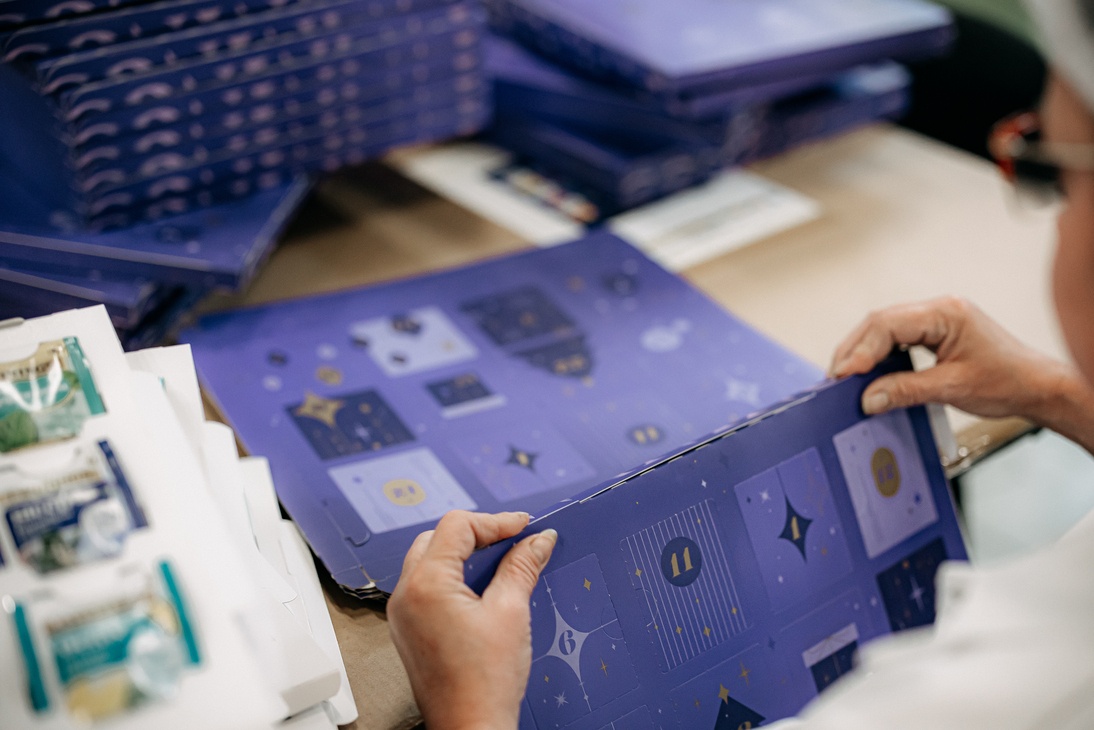
Co-packing is a good example. The term covers outsourced packaging operations such as filling, labelling, repacking, shrink-wrapping, preparing promotional bundles, mixing ingredients and assembling retail-ready products. Some of these processes can be automated, while others require flexible teams capable of carrying out manual work that would be expensive to organise internally.
For FMCG and e-commerce businesses, outsourcing these activities can free internal teams to concentrate on product development, sales and marketing rather than managing packaging staff, equipment and fluctuating campaign volumes.
This article examines why CEE – and Poland in particular – can offer an attractive combination of cost efficiency, labour availability, quality standards and access to Western European markets.
Lower labour costs without moving production outside the EU
For most FMCG businesses, packaging is a supporting process rather than a source of competitive advantage. Internal teams usually create more value by developing products and strengthening the brand than by recruiting packaging staff, managing shift schedules or maintaining underused machinery.
Outsourcing removes much of this operational burden, but the location of the provider still affects the economics. The average gross monthly salary in Poland’s enterprise sector was PLN 9,228.64 in the fourth quarter of 2025 – approximately €2,140 at the European Central Bank exchange rate of July 2026. Although Polish wages have risen considerably, they remain below the levels found in many Western European economies.
Polish co-packers can therefore price labour-intensive services competitively within the EU. For compact or higher-value products, added transport costs may remain modest compared with packaging savings. Bulky, low-value goods require closer calculation, but distance alone should not rule out the model.
Access to labour for processes that cannot be fully automated
Cost is only part of the argument. In many Western European markets, finding people willing to perform repetitive production and packaging work has become increasingly difficult. Even automated lines require trained operators, while numerous co-packing projects still depend heavily on manual work.
This is particularly true for unusual packaging formats, promotional campaigns, mixed product bundles, gift sets and premium products requiring careful presentation. These projects often involve short runs and frequent format changes, making dedicated automation either impractical or expensive. A flexible workforce can therefore be more valuable than another high-speed machine.
“One of the strengths of our market is access to people willing to carry out manual packaging work efficiently and reliably – provided that the co-packer has the right onboarding, supervision and quality-control processes in place. In some cases, it can even make economic sense for a Western European company to send its own packaging equipment to an Eastern European co-packer and have it operated there rather than locally,” says Bartek Grajewski, Director of co-packer TRANSPAK, which serves FMCG and e-commerce businesses across Europe.
The benefit is therefore not simply cheaper labour. It is access to scalable capacity that can be added for a campaign, seasonal peak or new-product launch without forcing the client to recruit and retain a permanent packaging team.
Cost efficiency does not have to mean lower quality
The obvious concern is whether lower operating costs come at the expense of quality. For an FMCG business, a missed deadline, poorly applied label or incorrectly assembled pack can lead to retailer complaints, product returns and damage to the brand.
Relocating co-packing within the EU is different from outsourcing to an unfamiliar regulatory environment. Polish providers operate within the same European framework as their Western clients. EU food businesses must comply with hygiene requirements, and relevant operators are required to apply HACCP principles. Products moving between Member States are also governed by common rules concerning areas such as safety, traceability and consumer protection.
Certifications and documented systems provide an additional layer of assurance. Depending on the products and services involved, a co-packer may hold standards or certifications such as ISO, GMP, HACCP or Organic. Clients should still audit facilities and examine quality-control procedures rather than relying on geography alone. However, established CEE co-packers are modern, process-driven operations, not basic factories competing solely on labour costs.
Poland is well positioned to serve Western European markets
Poland is also well placed to serve Western Europe. It borders Germany and has direct road links towards Austria and the Benelux region. The North Sea–Baltic and Baltic–Adriatic corridors connect its production centres with major Western and Southern European markets.
Poland’s road infrastructure has also changed dramatically since EU accession. By the end of 2025, the country had more than 5,466 kilometres of motorways and expressways, with further expansion continuing.
Finished, retail-ready goods can be transported by road without customs duties or internal border controls. For compact FMCG products, this often makes the additional distance manageable, especially when shipments are consolidated and the savings generated by the co-packing process are considered alongside freight costs.
A practical outsourcing option, not simply a cheaper one
Relocating co-packing to CEE is not only about lower labour costs. Its advantage lies in flexible capacity, EU-aligned standards and efficient access to Western markets.
Poland is therefore a practical option for FMCG and e-commerce businesses seeking to keep internal teams focused on products, sales and growth. The final choice should reflect volumes, lead times, certifications and quality controls, but suitable projects can balance flexibility, reliability and cost efficiency.
Popular Articles
You Might Also Like
Q2 2024

Beyond MiCA: The Expanding Role of the EU in Crypto Regulation
Known for its stringent regulations and cautious approach to change, the European Union (EU) has not been among the world’s innovators, more focused on compliance than disruption.
20th October 2025 · 5 min read
Court rejects non-transparent licensing regimes
Today, the CJEU manifestly ruled that enforcement actions against EU licensed operators unlawfully excluded from national licensing processes are prohibited and not in compliance with EU law
23rd June 2017 · 3 min read