








Online reviews can make or break a business. In the EU, fake reviews and review extortion have become a growing problem. Competitors post false complaints. Customers demand refunds or freebies under the threat of bad reviews.For businesses, knowin...
1st August 2025 · 4 min readHow European SMEs Are De-Risking Industrial Equipment Purchases in 2026
Posted on 14th August 2026 · 5 min read
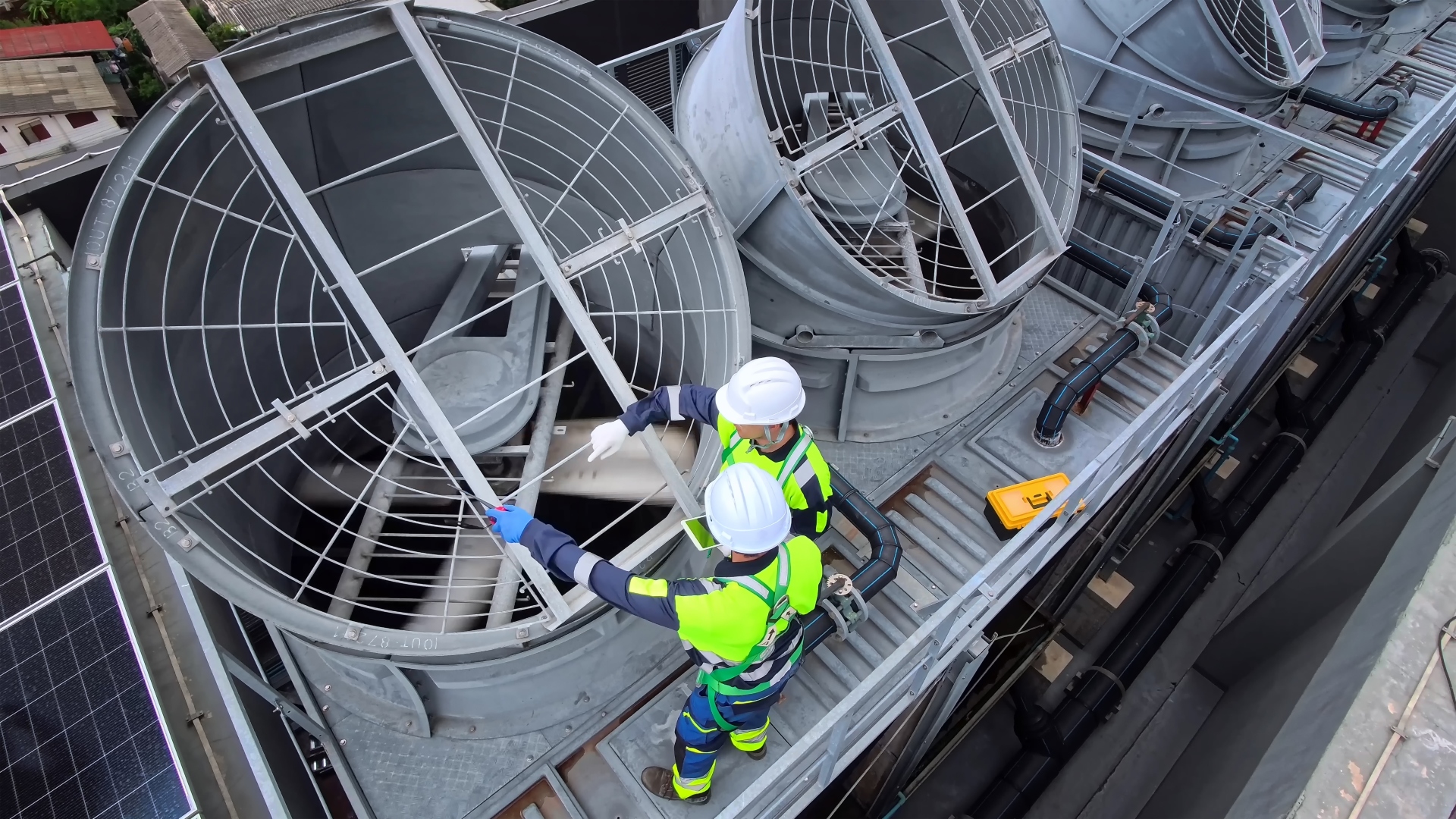
For a growing manufacturing business, the machine on the shop floor is rarely just a line item on a balance sheet. It is a production commitment. When a laser cutter or CNC router goes down for two weeks because a spare part has to clear customs from the other side of the world, the cost is not the part – it is every order that missed its deadline while the machine sat idle.
That gap between “the price on the quote” and “the true cost of ownership” is where most equipment-buying mistakes are made. And as more small and mid-sized manufacturers across the UK and Europe modernise their production lines, the question they are learning to ask is no longer just “how much does it cost?” but “what happens when it breaks?”
The hidden risk in industrial procurement
Manufacturing equipment purchases have always carried a layer of risk that’s easy to underestimate at the negotiating table. Unlike software or office equipment, a laser cutting machine or a CNC router is a long-term production asset – often financed over several years, expected to run daily, and directly tied to a company’s revenue capacity.
The risk isn’t necessarily in the machine itself. Most industrial equipment on the market today, regardless of country of origin, is technically capable. The risk sits in everything around the machine: who validates its build quality before it ships, who is accountable if a component fails, and how quickly a business can get back to production when something goes wrong.
This is particularly relevant for companies sourcing equipment manufactured outside Europe. The manufacturing capability exists – but evaluating it from a distance, without local recourse if something goes wrong, is where many buyers get burned. A machine that looks identical to a competitor’s on a spec sheet can come with a completely different risk profile once you look past the price tag.
Why “who sold it to you” matters as much as “who made it”
One pattern that’s become increasingly visible among manufacturing SMEs: the businesses reporting the fewest procurement headaches are rarely those buying directly from an unfamiliar overseas factory. They’re the ones buying through a supplier that sits between the manufacturer and the customer – someone who has already done the due diligence on build quality, sources components from established industrial brands, and, critically, is contactable and accountable locally once the sale is closed.
This is less about nationalism in sourcing and more about risk transfer. A local or regional supplier absorbs the burden of vetting manufacturers, stocking spare parts, and managing warranty claims, so the buyer doesn’t have to become an expert in international industrial sourcing just to keep their production line running.
Dutch-based supplier Virmer, which sells CO2 and fibre laser machines, CNC routers and related equipment across Europe, is a useful illustration of how this plays out in practice. Rather than reselling equipment from any available factory, the company works with a limited set of vetted manufacturers and component brands, and backs its machines with a warranty starting at two years, extendable up to five years on select equipment categories, alongside local service and delivery across the EU. For a buyer, that structure does two things at once: it filters out a layer of manufacturing risk before the machine ever reaches the shop floor, and it converts an abstract promise of “quality” into a contractual, time-bound commitment.
What a genuinely useful warranty looks like
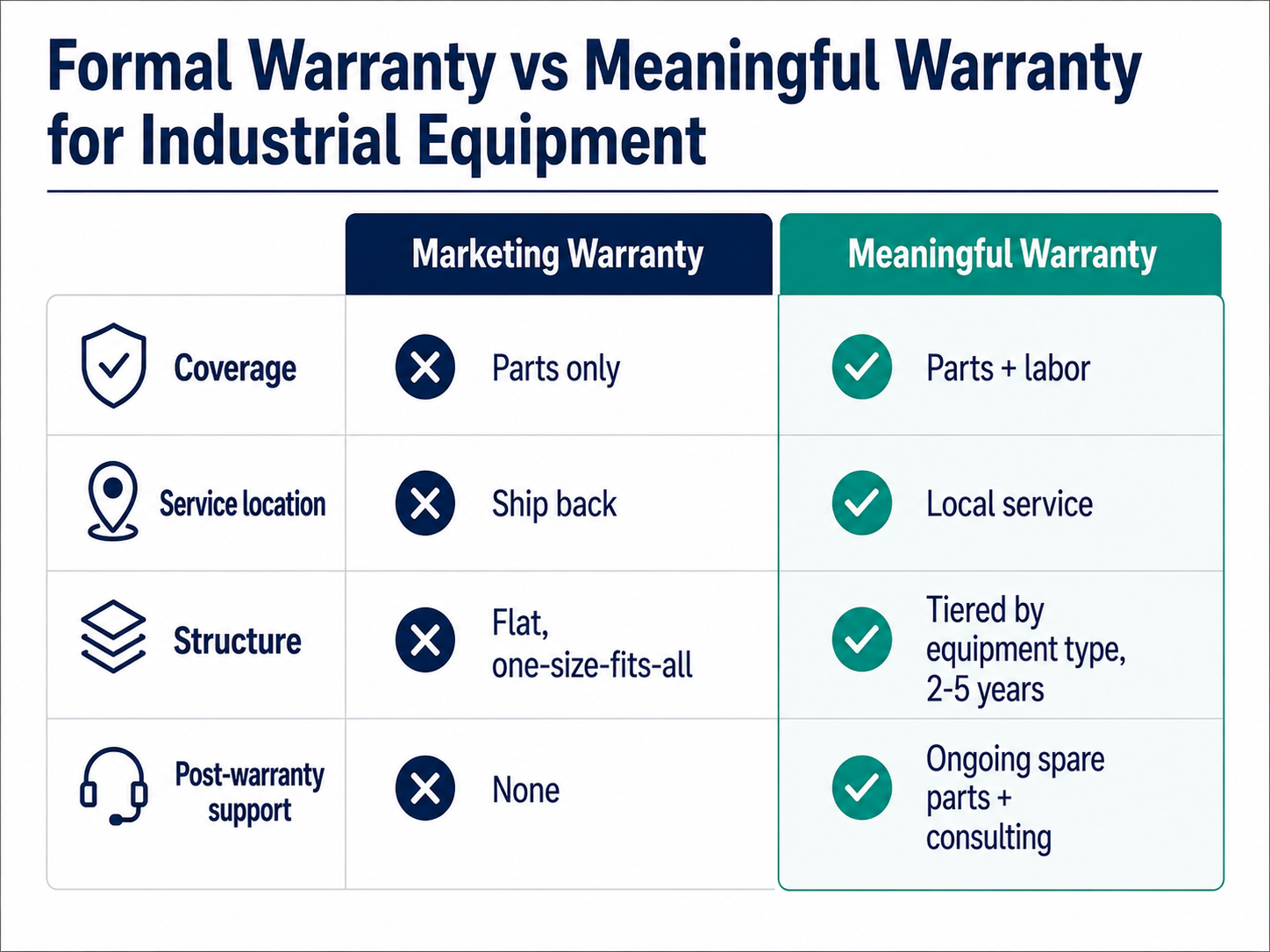
Not all warranties are created equal, and manufacturing buyers are increasingly reading the fine print rather than taking the headline number at face value. A few questions consistently separate a meaningful warranty from a marketing line:
Does it cover parts, labour, or both? A warranty that only covers replacement components – while the buyer pays for a technician’s time and travel – is a fraction of the protection it appears to be.
Is service local, or does the machine need to be shipped back? For a production asset, downtime measured in weeks rather than days can be more costly than the repair itself.
Is the warranty tiered by equipment type? A base warranty across the full range with extended coverage available on higher-investment machinery – such as the two-to-five-year structure suppliers like Virmer offer – often reflects a more realistic risk assessment than a flat, one-size-fits-all number.
What happens after the warranty period? Ongoing access to spare parts and consulting on how to run the equipment efficiently matters just as much as the initial coverage window.
Building a simple due-diligence checklist
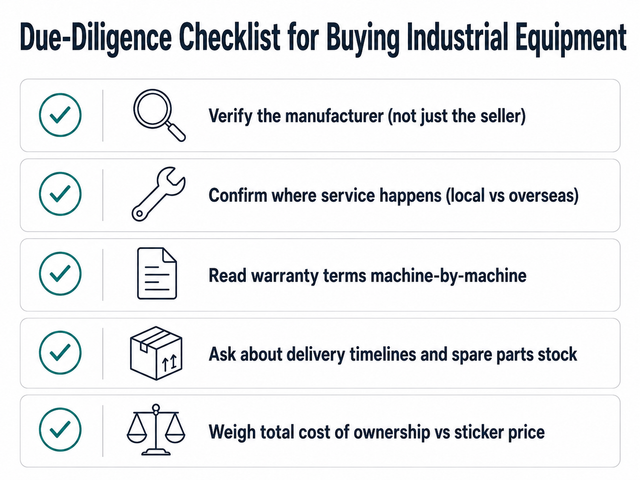
For procurement teams and business owners evaluating industrial equipment suppliers, a short checklist can prevent most of the expensive surprises:
- Verify the manufacturer, not just the seller. Ask which factory actually builds the machine, and how long the supplier has worked with them.
- Confirm where service happens. Local or regional service capacity should be treated as a non-negotiable line item, not a nice-to-have.
- Read the warranty terms machine by machine. Coverage length, what’s included, and any category-specific extensions should be documented, not assumed.
- Ask about delivery timelines and spare parts stock. A supplier’s answer here is often the clearest signal of how seriously they take the “after the sale” relationship.
- Weigh total cost of ownership, not sticker price. A slightly higher upfront cost with strong local support frequently works out cheaper than a discount machine with an unreliable safety net.
The bigger picture
As automation becomes more accessible to smaller manufacturers, the barrier to entry is shifting. It’s no longer primarily about whether the technology exists or whether a business can afford it – it’s about whether a company can buy it with confidence. Warranty terms, service accessibility, and supplier accountability have quietly become as strategic to a manufacturing investment as the specifications of the machine itself.
For business leaders weighing an equipment upgrade in the year ahead, the smartest move may not be finding the cheapest machine on the market – it’s finding the supplier willing to stand behind it the longest.
Popular Articles
You Might Also Like
How Can EU Businesses Handle Fake Reviews and Review Extortion Legally?

EU Business News Announces the Winners of the 2025 German Business Awards
United Kingdom, 2025 – EU Business News Magazine is pleased to unveil the winners of this year’s German Business Awards.
9th December 2025 · 3 min read
Your Website Is Not a Brochure—It’s a Business Tool. Start Treating It Like One
Your website might be beautiful. It might even have clever copy and slick graphics. But if it’s just sitting there looking pretty, it’s not working hard enough for your business. Too many companies treat their websites like digital bro...
1st July 2025 · 4 min read