



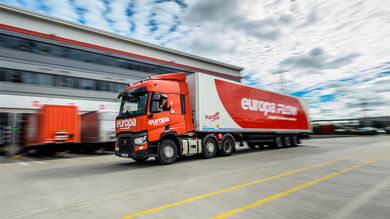
The Office for National Statistics estimates that British exports of goods to the Republic of Ireland amounted to £28bn in 2023.
17th June 2024 · 3 min readWhy EU Property Businesses Need a Separate Operating Model for UK Assets
Posted on 27th July 2026 · 4 min read

European businesses have become accustomed to managing customers, employees, suppliers and investments across borders. Property is part of that picture, with EU companies, family offices and entrepreneurs buying residential and commercial assets outside their home markets.
However, a UK rental property cannot simply be added to an EU portfolio spreadsheet and assessed using the same assumptions as an asset in France, Germany, Spain or the Netherlands. Since the UK operates outside the EU’s legal and tax framework, its property rules need to be treated as a separate operational layer.
For EU-based businesses and founders with UK exposure, the challenge is not only understanding one tax rule. It is building financial systems that show how ownership, borrowing, tax residence, currency and local regulation affect the real performance of each asset.
Cross-Border Growth Creates More Than Currency Risk
When a business assesses a foreign property, the initial model often focuses on purchase price, rent, financing costs and expected appreciation. That may be enough for an early comparison, but it is not enough for an acquisition decision.
A complete model should also capture:
- The legal owner of the property
- The tax residence of that owner
- The country in which rental income is taxed
- Local rules governing deductible finance costs
- Exchange-rate movements between rent and reporting currency
- Maintenance, insurance and management costs
- Reporting requirements in both jurisdictions
- The cost of extracting or reinvesting profits
The European Commission’s guidance on cross-border investments includes buying or leasing property among the ways businesses can invest internationally. Within the EU, investors benefit from single-market protections, although national tax and property rules still apply.
Section 24 Shows Why Ownership Data Matters
The difference between the person managing an asset and the entity legally owning it can materially change the numbers.
An EU property business may oversee several UK rentals, but some assets may be owned personally by a founder, jointly by family members or through a partnership. Others may sit inside a UK limited company. Those structures should not be grouped together in the same tax model.
HMRC’s finance-cost restriction, commonly known as Section 24, applies to individual residential landlords and partners rather than limited companies. It prevents affected landlords from deducting all residential mortgage interest before calculating taxable property profit. Instead, eligible finance costs generally produce a basic-rate tax reduction.
EU-based founders holding UK property personally can review the mechanics through this guide to Section 24 tax for UK landlords, which includes worked calculations illustrating how rental income, mortgage interest and other earnings interact.
The relevance for an EU business is not that every UK asset is affected. It is that a portfolio dashboard must know which assets are affected.
A system that automatically treats mortgage interest as a fully deductible operating expense may correctly model a company-owned property but materially misstate the position of a personally owned one. If the ownership field is incomplete, the return-on-equity calculation, refinancing forecast and projected cash reserve may all be wrong.
Separate Taxable Profit From Commercial Performance
One of the most useful changes a cross-border property operator can make is to stop relying on a single “profit” figure.
Each asset should have at least three separate views:
Operating performance
This records rent received minus mortgage payments, maintenance, management, insurance and other cash expenses. It shows whether the property is generating or consuming cash.
Local taxable result
This applies the rules of the country in which the property income is taxed. It may differ significantly from the operating result because some expenses receive limited, delayed or no tax relief.
Consolidated business return
This converts the outcome into the EU business’s reporting currency and considers central overheads, financing arrangements and any additional home-country obligations.
Keeping these figures separate prevents a tax calculation from being mistaken for genuine cash profitability. It also allows management to compare assets without pretending their regulatory environments are identical.
Digital Records Should Support Decisions, Not Just Compliance
Cross-border property businesses often begin with separate spreadsheets, local agents and folders of emailed documents. That may work for two or three assets, but it becomes unreliable as the portfolio grows.
Digital reporting is also becoming more important in the UK. From April 2026, in-scope individual landlords with qualifying self-employment and property income above £50,000 must use compatible software under Making Tax Digital for Income Tax. The system requires digital records and quarterly submissions to HMRC.
For EU operators, this creates an opportunity to improve more than tax filing. The same data can power:
- Real-time cash-flow monitoring
- Mortgage-rate alerts
- Vacancy and arrears reporting
- Maintenance-cost comparisons
- Document renewal reminders
- Currency-adjusted performance reports
- Acquisition and disposal forecasts
Automation is most valuable when it reduces duplicate entry and exposes problems early, rather than merely transferring an old spreadsheet process into new software.
Stress-Test Assets Before Expanding the Portfolio
Commercial growth should be based on scenarios rather than one expected outcome.
Before acquiring another UK property, an EU-based operator should test what happens if borrowing costs rise, the property is empty for several months, repairs exceed budget or the euro strengthens against sterling. The model should also show how results change under different ownership structures without assuming that restructuring an existing asset will be simple or inexpensive.
Local Expertise Remains Part of a Scalable System
Technology can organise information, automate reporting and identify unusual results. It cannot make UK and EU tax systems interchangeable.
An EU business with UK property exposure may require coordination between its internal finance team, a UK property-tax adviser, its home-country accountant, lenders, legal advisers and local property managers. Their roles should be defined before a transaction rather than after a reporting problem appears.
For EU property businesses, UK assets can still provide income, diversification and commercial opportunities. The businesses most likely to scale successfully will be those that treat each jurisdiction as a distinct operating environment while maintaining consistent data, controls and decision-making standards across the group.
Popular Articles




Why High-Net-Worth Investors Are Pivoting to AI and HealthTech in 2026
5 min read
Building Confidence in a Digital Economy: Why Cybersecurity Is Now a Business Imperative
3 min read
Best Instant Funding Prop Firms With No Hidden Rules
6 min read
7 AI PDF Reader Tools Reviewed: Which One Is Worth Your Time?
7 min read
You Might Also Like
New Service Launches for Business Trading with the Republic of Ireland

eID Easy Brings Ukraine’s Diia.Signature to the EU for Legally Valid Signing
eID Easy, an Estonian company founded in 2016, simplifies eID authentication and electronic signatures for websites. It offers an easy-to-integrate API for Simple Electronic Signatures and specializes in Qualified Electronic Signatures (QES) and A...
17th February 2025 · 3 min read
How AI Answer Engines Decide Which Sources to Cite
Most teams still treat AI visibility as a ranking problem with a new coat of paint. Publish strong content, earn links, climb the results page, and assume the citations follow. The data says otherwise, and the gap between those two mental models i...
14th August 2026 · 7 min read