







A recent YouGov survey carried out for Faurecia Clarion Electronics highlights safety and sustainability as the key considerations for future cars in the UK, France, Germany and Italy.
10th May 2019 · 4 min readRemote and Hybrid Work: What Actually Drives Productivity Across EU Teams?
Posted on 6th July 2026 · 4 min read

Few operational questions matter more to a growing European company than this one: does working across multiple EU countries help or hinder team performance? For Denis Salatin, founder & CEO at Lumitech, the answer has come from years of running a distributed technology company with people spread across several European markets — and the lessons are more practical than any remote-work theory suggests.
The EU is often described, informally, as a single market. In practice, for anyone managing people rather than just moving goods, it behaves more like a federation of distinct working cultures stitched together by a shared regulatory floor. One of the clearest lessons from operating across these markets is that productivity is shaped less by geography and more by whether a company has invested in collaborative decision making software and the habits that go with it. Teams that have built that discipline consistently outperform those that haven’t, regardless of which EU country their office sits in. Understanding that distinction is the first step toward building a genuinely productive hybrid or remote team.
Denis Salatin, Founder & CEO at Lumitech, on Distributed Teams in Europe
The conversation around remote and hybrid work tends to get reduced to a single question: how many days should people be in the office? That framing misses what actually determines whether a distributed European team performs well. The more useful questions are about overlap hours, decision rights, and how much of a company’s culture is deliberately written down versus assumed through in-person contact.
How Time Zones Shape Productivity Within the EU
The European Union spans three time zones, from Western European Time to Eastern European Time. That two-hour spread sounds modest, but for teams split between, say, a western hub and an eastern one, it quietly shrinks the working overlap available for synchronous collaboration. Teams that treat this as a minor inconvenience tend to lose the first and last hour of the day to scheduling friction. Teams that design around it — anchoring only the meetings that truly require real-time discussion, and defaulting everything else to asynchronous updates — recover that time almost entirely.
Labour Norms and What They Mean for Hybrid Work
EU member states differ meaningfully in their labour norms, and those differences shape what a realistic hybrid policy looks like. Some markets have strong traditions around fixed working hours and a clear separation between work and personal time, reinforced by national labour law. Others have more flexible, output-oriented expectations. A hybrid policy copied wholesale from one national context and applied across a pan-European team will inevitably feel wrong to at least part of that team — either too rigid or too loose. The companies that get this right tend to set a small set of non-negotiable shared principles and leave the rest to be interpreted locally.
Office Culture Still Matters, Even in a Remote-First Company
It is tempting, in a remote or hybrid company, to treat the physical office as an afterthought. That is a mistake. Across European markets, the office still plays an outsized role in onboarding, informal knowledge transfer, and the kind of trust-building that is very difficult to replicate over video calls. The most productive distributed teams Lumitech has worked alongside treat in-person time as a scarce, high-value resource — reserved for onboarding, quarterly planning, and moments that genuinely benefit from being in a room together — rather than a default expectation for every week.
Written Culture as the Real Differentiator
The single biggest predictor of whether a distributed European team performs well is not its time zone spread or its national mix — it is whether the company has invested in a strong written culture. Decisions that are documented rather than only discussed. Context that is captured in a shared document rather than living in one person’s head. Onboarding material that lets a new hire in one country ramp up without needing to shadow a colleague in another. Companies that build this discipline early find that their productivity holds steady as they add new markets. Companies that don’t find that every new country they expand into adds friction rather than capacity.
What Denis Salatin’s Experience Reveals
Running Lumitech across several European markets has made one thing clear: the productivity gap between a well-run distributed team and a poorly run one dwarfs the gap between any two individual countries’ working cultures. The national differences are real, and worth respecting, but they are not the main event. The main event is whether a company has built the internal infrastructure — communication norms, written documentation, clear decision rights — that lets performance travel with the person rather than being tied to a particular office.
Productivity Across the EU Is an Organisational Choice
The most durable insight from operating a distributed team across the EU is that productivity is an organisational choice, not a geographic one. Every EU market offers genuine strengths — deep talent pools, strong professional standards, well-developed infrastructure. What none of them provides automatically is the internal discipline that turns a group of capable individuals working from different countries into a single, coherent team.
That discipline has to be built deliberately, shaped around the specific number of markets, time zones, and the mix of synchronous versus asynchronous work a company actually needs. Getting that right will do more for a European team’s output than any single decision about where to locate a head office.
For founders and operators building across the EU, the practical takeaway is straightforward: stop asking which country is best for productivity, and start asking whether the organisation is designed to extract strong performance from wherever, within Europe, its people happen to be.
Popular Articles
You Might Also Like
Safety and eco-friendliness: top priorities for future cars say Europeans
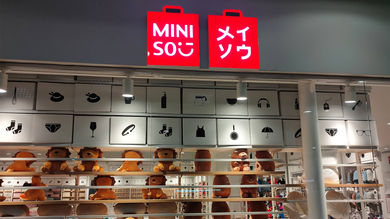
MINISO Ramps Up Expansion in Europe, Opens New Stores in Spain, UK and Italy
Lifestyle product retailer MINISO is further strengthening its business foothold in Europe as it has announced the opening of a new store in Seville, the capital city of Andalucía in southern Spain on August 26. The opening of the new location in ...
8th September 2021 · 2 min read
The EU Taxonomy and SFDR: Catalysts for Sustainable Growth Amidst Real Estate Market Challenges
In the rapidly evolving landscape of the European real estate market, where sustainability and resilience are becoming increasingly pivotal, the European Union’s Green Deal, Taxonomy Regulation, and the Sustainable Finance Disclosure Regulation (S...
19th March 2024 · 3 min read